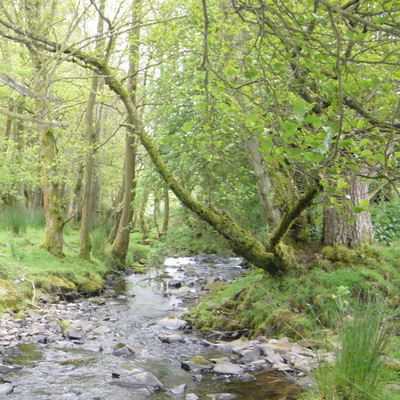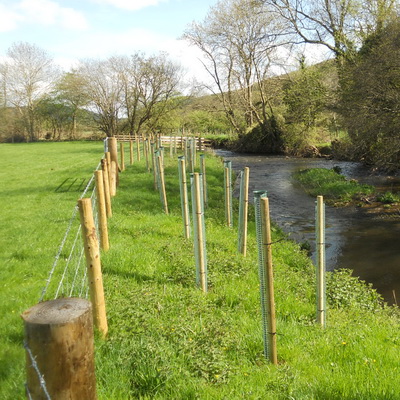
The Walcot Wiggle is an ambitious river restoration project which has reconnected more than a kilometre of historic river channel and created a network of wetlands and floodplain features that slow, store and clean water naturally.
Context
For generations, rivers across the UK, including the Kemp, were straightened to create more productive farmland, drain wet ground and move water away from the landscape as quickly as possible. At the time, it made sense with the knowledge and priorities people had.
Straightened rivers flow faster, disconnect from their floodplains and loose the natural habitats that fish, birds, mammals and insects rely on.
Restoring natural meanders and reconnecting rivers with their floodplains, slows the flow of water through the landscape, reducing downstream flood peaks, improving water quality and creating thriving habitats for wildlife.
Opportunity
Local advisors from Catchment Sensitive Farming and the Shropshire Hills Farming in Protected Landscapes programme met with one of the farmers on the Kemp to explore ideas for their farm. These conversations sparked the start of the project, which became a joint initiative with the neighbouring farm to manage their often-flooded land in the Kemp valley differently. With both landowners in agreement the Walcot Wiggle began to take shape, and funding and permissions secured to restore natural meanders and reconnect over a kilometre of the river with its natural floodplain.
Location
The River Kemp is a tributary of the River Clun, part of which is a Special Area of Conservation that supports internationally important freshwater species, including the freshwater pearl mussel.
The Clun Forest and the Clun Valley are the most deeply rural parts of the National Landscape, with a strong culture of traditional farming, local heritage and close community in an area known for its tranquillity.
Working in partnership
Local advisors from Catchment Sensitive Farming and the Shropshire Hills Farming in Protected Landscapes programme devised a bespoke audit for the site, based on a (PA2) feasibility plan. This helped to inform project plans and was used by the Catchment Sensitive Farming team to investigate opportunities for the farmland to be put forward for Countryside Stewardship Higher Tier (CSHT) agreements. Work continued through the project and two long-term agreements for the river channel area were secured by the time it came to the point of reconnection, under the ‘Make Room for the River to Move option’
The audit was carried out by Severn Rivers Trust. The information formed the basis for project partners (Severn Rivers Trust, Environment Agency, Natural England, Catchment Sensitive Farming, Shropshire Hills National Landscape team) and the two farmers to agree a programme of work to restore the historic river channel.
The project was delivered on the ground by Severn Rivers Trust. Their work included forming the project design alongside landowners with the understanding of where the original river channel was; seeking permits and necessary permissions for works; oversight of numerous baseline surveys taking place on site and overall site and contractor management.
This project was also supported closely by the Environment Agency, through funding and local partnership working, and also technical advice on the river geomorphology; how to manage the river reconnection and the required permits for these works. It meets shared ambitions held by the Environment Agency and other partners, to restore natural hydrology and create rich habitats, including for Atlantic salmon, freshwater invertebrates and many other iconic river species.
Local contractors excavated the original river channel, created additional wetland scrapes and pools, and added river gravels to create habitat for wildlife. Their skill and understanding of natural processes was crucial to the project being a success. Trees and shrubs were also planted along the riverbank to create shade.
The river was reconnected with its floodplain in June 2026. View footage here.
Impact
Reconnecting the river with its floodplain and enabling it to follow its natural course through the valley brings multiple benefits to the river system, and to:
Nature and climate: By restoring natural processes, the Walcot Wiggle is improving water quality and soil health, and is helping the landscape become more resilient to climate change. The project has created a series of wildlife habitats for fish, mammals, wading birds, amphibians and invertebrates.
Heritage features: Archaeological research carried out ahead of the works revealed that this valley was once part of a 19th-century floated water meadow system. A network of carriers and sluices directed water from the Kemp across the floodplain to enrich soils and encourage early grass growth for livestock. With this area known to have important heritage, a detailed archaeology survey was undertaken prior to any works, appropriate checks and permissions sought, and an archaeological watching brief in place during the excavation works. The Walcot Wiggle follows the same principle of working with natural water movement to sustain a healthy landscape while maintaining these historic features. By helping to re-wet parts of the historic water meadow system, the restoration is also contributing to the long-term preservation of archaeological features that were originally designed to hold and convey water.
Farmland: The project reflects the ambition of the landowners to manage the floodplain for the long term through Countryside Stewardship Higher Tier, creating a landscape that works for farming, nature and water. The project was one of the first Higher Tier Making Room for the River to Move countryside stewardship schemes that pays farmers to manage land in a way that protects, environment and mitigates the effects of climate change.
Community: Restoring the river and its floodplain slows the flow of water through the valley and will help to reduce the impact of downstream flood peaks, improve water quality and create thriving habitats for wildlife. The project has demonstrated the importance of bringing people together, helping to integrate nature with farming and land management and working in partnerships to help to look after this much-loved landscape.
30 by 30
From a 30 by 30 perspective, the approach taken to this project is a good example of the importance of ensuring long term commitment to land management to benefit nature. This links to the 3 criteria of purpose, management and protection. The Higher Tier agreement was central to this, ensuring that the landowners have a long- term agreement in place, receiving funds to support their stewardship of this land, through enabling river restoration and the appropriate habitat and grazing management as part of their wider farming system.
Mutual support
The Walcot Wiggle shows what can be achieved when ambitious landowners, trusted advice, sound evidence and strong partnerships come together with a shared vision. Without the landowners willingness and commitment, this project would not have been able to move forward. The landowners were integral to the success of this project and were involved with every agency in every step along the way.
Funding
The Walcot Wiggle project was funded by:
- Shropshire Hills National Landscape 30 by 30 funding from Defra
- Environment Agency Local Water Environment Grant
- Elgol Fund for Nature
- HDH Wills Charitable Trust
The initial bespoke site audit was funded by the Farming in Protected Landscapes programme.