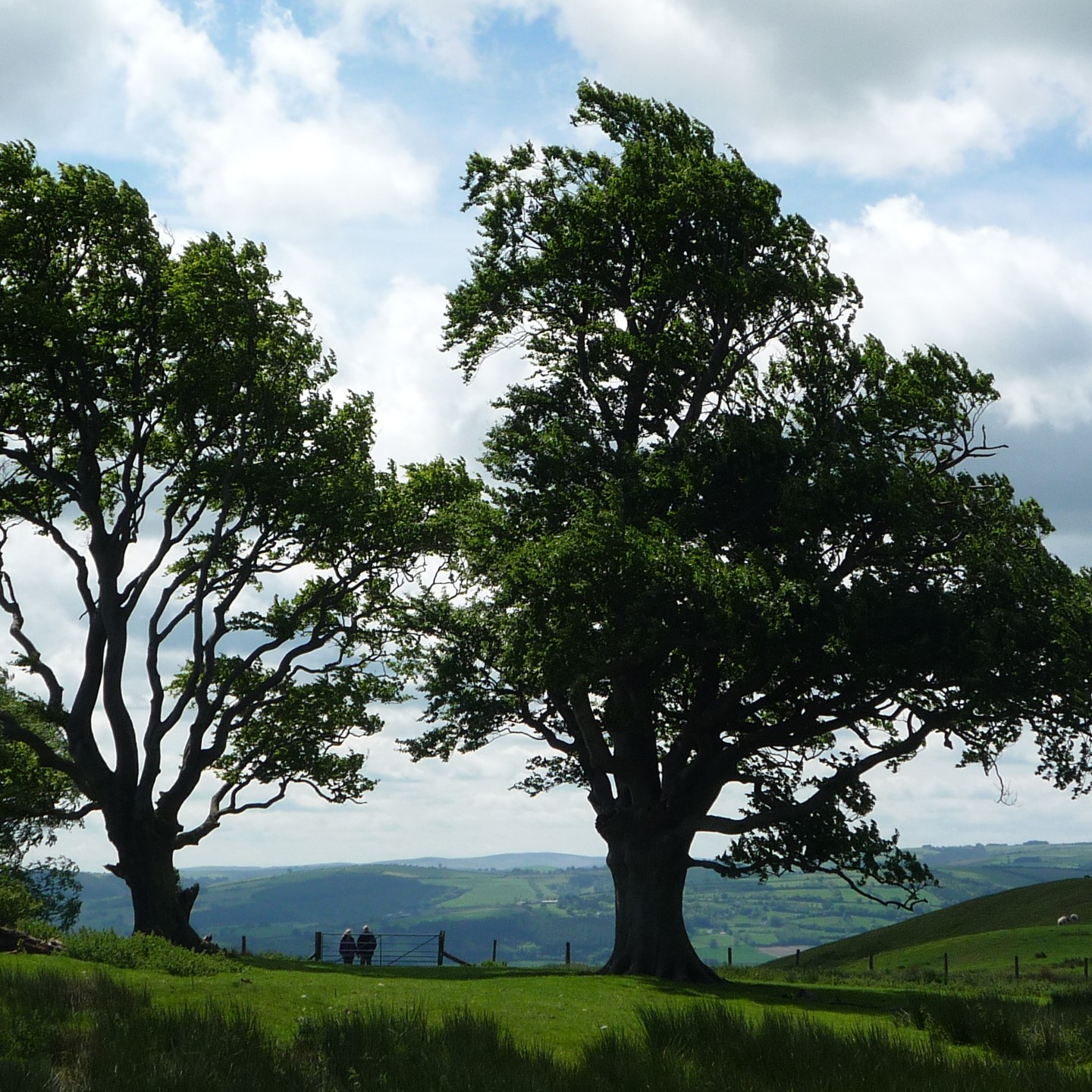
The Shropshire Hills landscape character is one of variety and of transition – between the lowland plains of the English Midlands and the uplands of Wales.
The rocky Stiperstones, the dissected plateau of the Long Mynd, the craggy volcanic Stretton Hills and Wrekin, the harsh quarried landscape of the Clee Hills, the long wooded scarp of Wenlock Edge, and the rolling enclosed hills of the Clun Forest all have their own distinctive character.
The hills define the identity of the area, and are the backbone of our landscape. Here are found commons, heath, moorland and rough grasslands, home to upland birds including Curlew, Red Grouse and Merlin.
Geology
The variety of geology in the Shropshire Hills is unequalled in any area of comparable size in Britain, or indeed the world. The hills, crags, scarps and valleys form this distinctive character.
No single hill or range stands out as the dominant feature. The Long Mynd, Stiperstones, Wenlock Edge, Wrekin, Clun and Clee Hills all owe their distinctive character to the rock type. The underlying geology also determines land use, patterns of settlement, and exploitation of minerals.
The area has a strong south-west to north-east trend in faulting and folding of the rocks, with many ridges being aligned in this direction. There is also evidence of glacial and periglacial processes, such as moraines, stone stripes and river capture, along with more recent features such as river terraces.
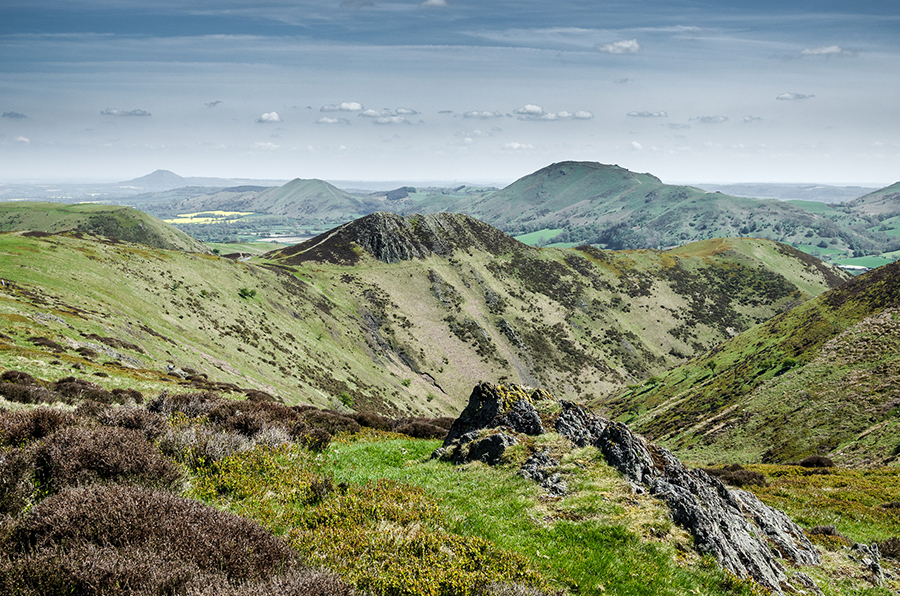 Long Mynd towards the Wrekin, by Phil King
Two centuries ago the pioneers of geological science, notably Roderick Murchison and Charles Lapworth, made many important discoveries in the Shropshire Hills. The local place names they gave to the geological formations are today adopted worldwide for rocks of the same age, e.g. Caradoc, Wenlock, Ludlow, Onnian and Sheinwoodian.
The variety of parent materials, in combination with climate and relief, have led to a wide range of soil types. Podsolised soils have developed over hard sandstones, siltstones, grits and volcanic rocks, supporting heathland and rough grassland.
In the Clee Hills, leached brown soils over Silurian, Devonian and Carboniferous rocks support pastoral farming. In the Clun Forest, the free-draining acid brown soils that have formed over Silurian siltstones are mostly grazed, but capable of arable production in some areas. Richer alluvial silts and clays have a limited extent in the river valleys.
For more information on geology in the Shropshire Hills and the rest of the county, visit: Shropshire Geological Society